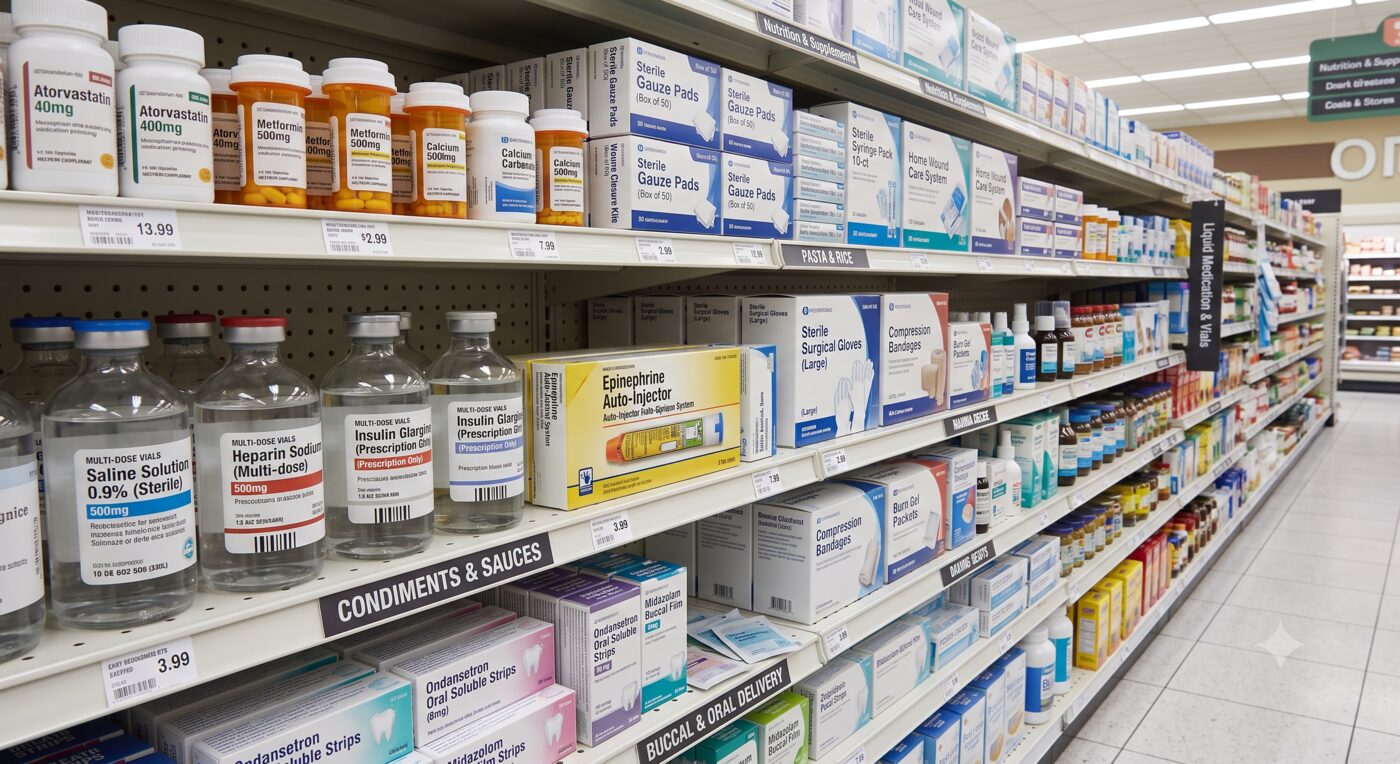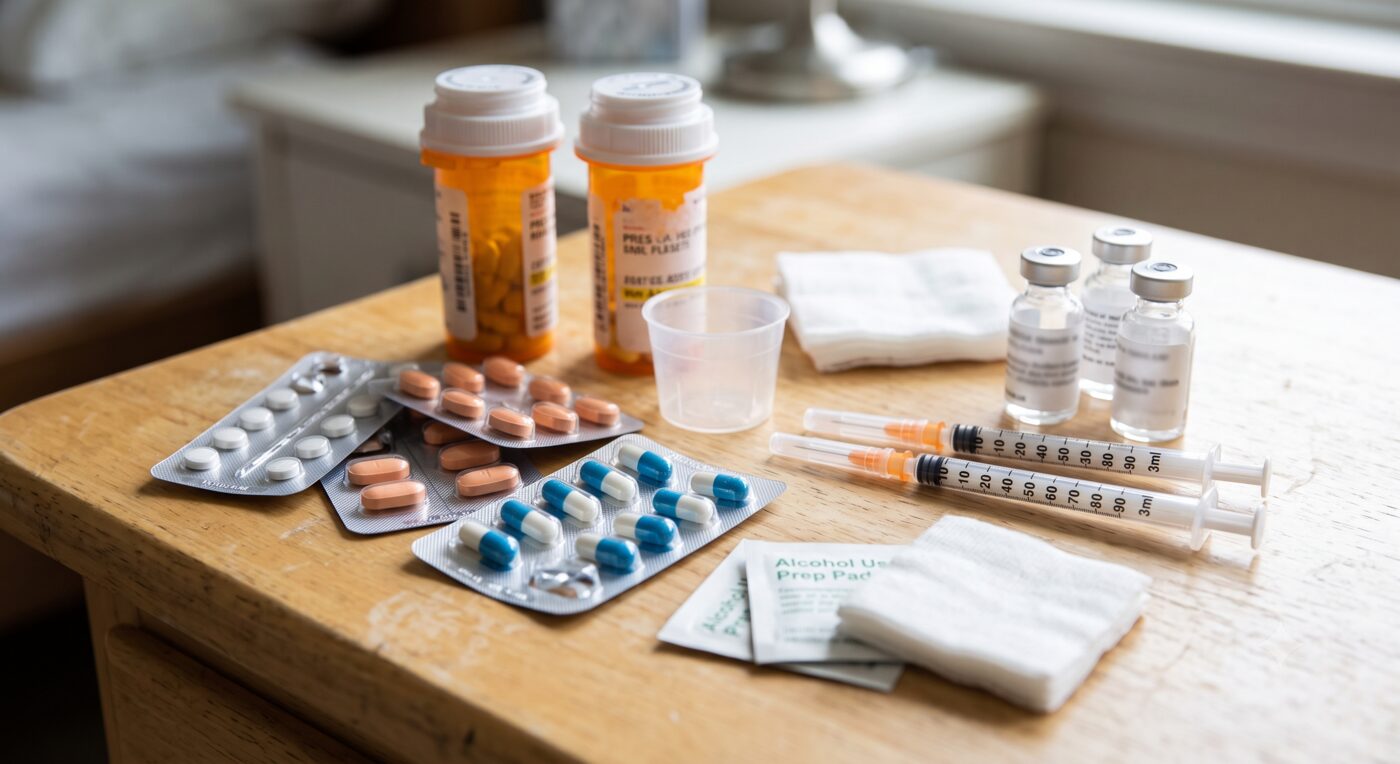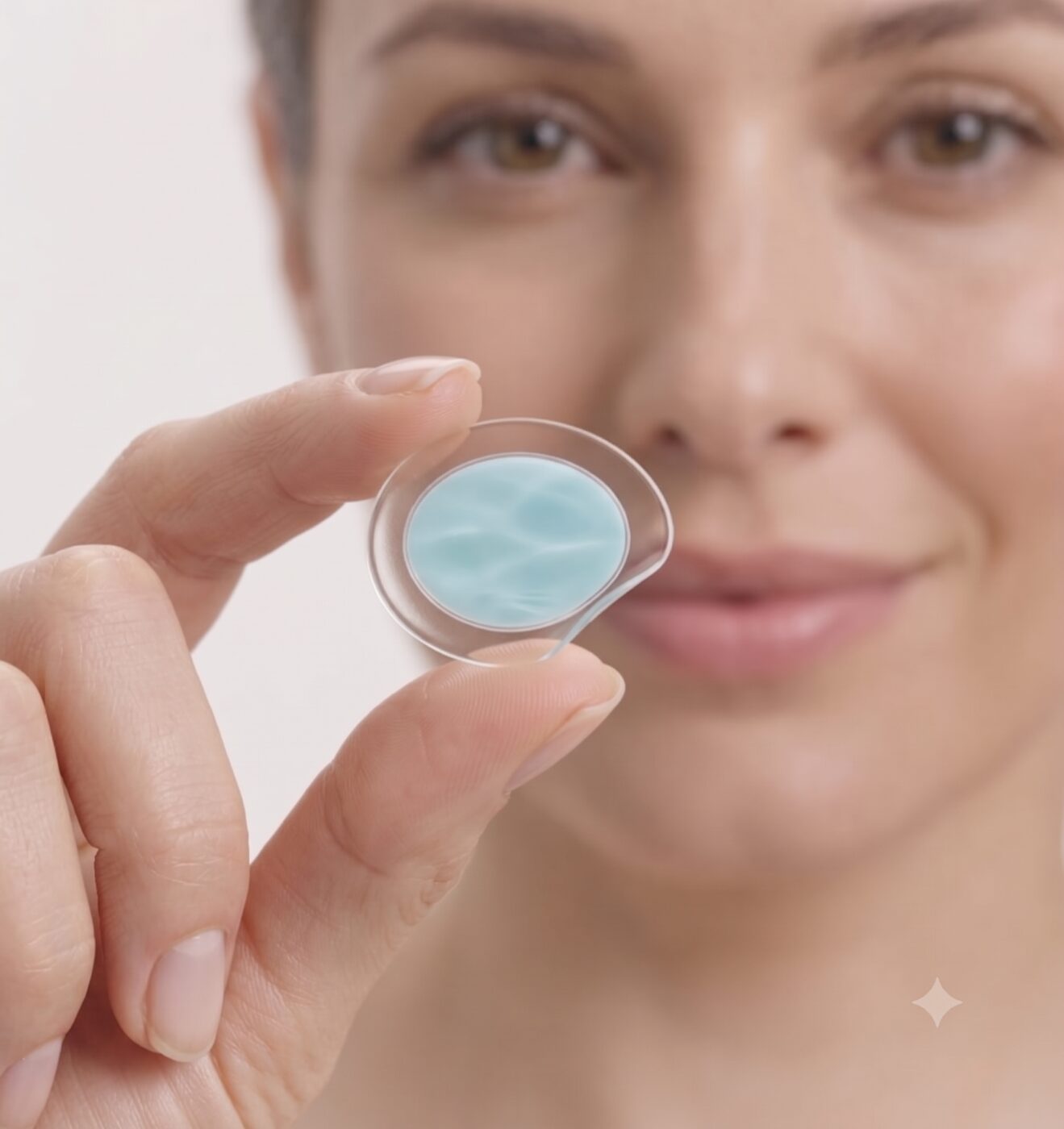
Even though peptide injections provide a direct way to deliver peptides into the body, repeated injections can mean needles, injection-site soreness, discomfort, and regular administration. As a result, interest in injectable peptide alternatives is growing, with researchers and developers looking at oral, nasal, transdermal, oral dissolving, and buccal delivery methods.
Over the years, numerous non-injectable peptide delivery methods have emerged, ranging from tablets and nasal sprays to skin patches, dissolving films, and buccal patches. Not only do these methods avoid traditional injections, but they also use different routes to move peptides toward the bloodstream.
The challenge is that peptides are not easy molecules to deliver. Many therapeutic peptides have molecular weights between 500 and 5,000 Daltons, which can make them harder to deliver across biological barriers. Their size, chemical properties, stability, and sensitivity to enzymes can all affect how much of the peptide reaches the bloodstream. This is why the future of peptide delivery depends not only on removing the needle, but also on finding better ways to protect the peptide and support its absorption.
What Are the Main Non-Invasive Alternatives to Peptide Injections?
Several delivery routes are being explored as injectable peptide alternatives, each using a different part of the body to deliver the peptide. Some routes try to avoid the digestive system, while others use the skin or mucosal tissue as the absorption site. The table below gives a simple view of how the main methods work and where their main delivery challenge lies.
| Delivery method | How it works | Main strength | Main challenge |
|---|---|---|---|
| Oral | Peptide is swallowed | Familiar and convenient | GI degradation and first-pass metabolism |
| Nasal | Delivered through nasal tissue | Avoids the GI tract | Mucus and variable absorption |
| Transdermal | Delivered through the skin | Patch-based delivery | Strong skin barrier |
| Oral dissolving | Film dissolves in the mouth | Simple, thin format | Peptide may be swallowed after dissolving |
| Buccal | Delivered through cheek tissue | Direct mucosal delivery, reduced GI exposure | Peptide must cross the buccal tissue |
The key difference is where the peptide has to travel before reaching systemic circulation. Oral delivery sends it through the GI tract; transdermal delivery asks it to cross the skin; nasal delivery uses the nasal lining; and buccal delivery uses the tissue inside the cheek. That difference matters because every biological barrier affects peptide stability and absorption in a different way.
Understanding Oral Peptide Delivery
One of the most common injectable peptide alternatives is oral delivery. A person takes a tablet, capsule, liquid, or similar product and swallows it, making the format familiar and easy to fit into a daily routine. The problem begins once the peptide enters the digestive system: the stomach and intestines contain acids and enzymes that break down proteins and peptides, and the intestinal lining creates a barrier that makes it difficult for larger molecules to move into circulation. This can greatly reduce peptide bioavailability — the amount of an active substance that reaches systemic circulation in a usable form.
How Does First-Pass Metabolism Affect Oral Peptides?
Oral peptide delivery has another issue beyond digestion. After a substance is absorbed from the intestine, blood from the digestive tract generally travels first to the liver through the portal circulation, where part of the absorbed substance can be metabolized before it reaches the wider bloodstream. This is known as first-pass metabolism.
For peptides, the combination of GI degradation, poor intestinal permeability, and first-pass hepatic metabolism can reduce systemic exposure. Researchers have explored many ways to address these problems, including protective coatings, enzyme inhibitors, absorption enhancers, nanoparticles, chemical modification, and other formulation strategies.
What Are the Benefits of Oral Peptide Delivery?
Oral delivery remains attractive because it is simple and familiar. Some key benefits include:
- No needle: The user does not need an injection.
- Familiar format: Tablets and capsules are already common dosage forms.
- Easy administration: The product can generally be taken without injection equipment.
- Simple storage and use: Many oral formats fit into normal daily routines.
However, convenience alone does not solve the problem of peptide absorption. The formulation still needs to protect the peptide and help enough of it reach circulation.
Understanding Nasal Peptide Delivery
Nasal delivery provides another injectable peptide alternative by using the lining inside the nose as the delivery site. A peptide can be formulated as a nasal spray or another nasal dosage form and delivered directly to the nasal cavity. One reason this route is useful is that the peptide does not need to pass through the stomach and intestines first, and the nasal mucosa has a rich blood supply giving the peptide a route toward systemic circulation.
However, nasal delivery depends on the formulation staying in contact with the nasal tissue for enough time. Mucus is continuously produced and moved, which can carry material away from the absorption area, and the amount that can be placed into the nasal cavity is limited. For peptides, the formulation must balance concentration, stability, residence time, and absorption.
What Are the Benefits of Nasal Peptide Delivery?
- Needle-free administration.
- Avoids the initial GI route.
- Uses an accessible delivery site.
- Does not require swallowing a tablet or capsule.
At the same time, nasal peptide delivery requires careful formulation because the nasal environment can affect how long the peptide remains at the absorption site.
Understanding Transdermal Peptide Delivery
Transdermal delivery uses the skin as the route for introducing a peptide into the body, usually by applying a peptide-containing patch. The format is simple and familiar, but the skin presents a major biological barrier — its outermost layer, the stratum corneum, helps prevent substances from moving into the body. Peptides also tend to be larger and more water-loving than many molecules that cross the skin more easily, which makes movement through the skin difficult.
What Makes Transdermal Peptide Delivery Difficult?
The main challenge is getting a useful amount of peptide through the skin. Researchers have explored penetration enhancers, physical methods, microneedles, and other technologies to improve peptide movement through the skin. These approaches can help address the skin barrier, but they can also make the delivery system more complex. A transdermal patch therefore needs to do more than hold the peptide: the peptide must remain stable in the formulation and reach the deeper tissue in a form and amount that supports systemic delivery.
Understanding Oral Dissolving Peptide Films
Oral dissolving films offer another injectable peptide alternative in the form of a thin strip that dissolves in the mouth. Instead of swallowing a tablet, the user places the film in the mouth and allows it to dissolve, after which the peptide is released and may be absorbed through the oral tissues or swallowed with saliva. If the peptide is swallowed, it can still enter the digestive system and face the same GI conditions associated with oral delivery.
What Are the Limitations of Oral Dissolving Peptide Films?
While oral dissolving films can make peptide delivery more convenient, the main challenge is controlling what happens after the film dissolves. Once the peptide enters the digestive system, it may be exposed to stomach acid and digestive enzymes, and saliva can dilute the peptide or carry it away from the intended area. This is an important difference between a dissolving oral strip and a dedicated buccal delivery system: a dissolving strip releases its contents into the mouth, while a buccal system is designed to keep the peptide-containing formulation positioned against the cheek.
Understanding Buccal Peptide Delivery
Widely regarded as a promising approach to delivering peptides without injections, buccal peptide delivery uses the tissue inside the cheek as the delivery site. Rather than passing through the digestive system or across the skin, a peptide-containing patch is placed against the inside of the cheek, where the peptide is released at the buccal mucosa for absorption. The buccal mucosa is accessible, well supplied with blood vessels, and suitable for localized contact with adhesive films and patches.
This gives buccal delivery a useful position among injectable peptide alternatives. It avoids the digestive route used by swallowed products, does not rely on crossing the skin’s outer barrier, and provides a defined area where the formulation can remain in contact with mucosal tissue.
How Does Buccal Delivery Improve Peptide Bioavailability?
With oral delivery, the peptide must survive the GI environment, cross the intestinal barrier, and then pass through the liver before reaching systemic circulation — each stage reducing the amount of intact peptide available. Buccal delivery takes a different path: the peptide is placed against the cheek, allowing it to move across the buccal mucosa rather than first passing through the stomach and intestines. Because the buccal route can bypass the GI tract and hepatic first-pass metabolism, it has the potential to improve systemic exposure compared with conventional oral delivery.
However, bioavailability is not determined by the route alone. The peptide still has to cross the buccal tissue, and peptide size, molecular properties, stability, permeability, formulation, residence time, and release rate all affect the final amount absorbed.
Why Is Buccal Peptide Delivery Gaining Attention?
Buccal delivery brings together several features that make it attractive for peptide administration: the cheek provides a direct mucosal delivery site, the route can reduce exposure to hepatic first-pass metabolism, and it offers a convenient location for a patch or film that can remain in place while the peptide is released. Some key features include:
- Reduced GI exposure: The peptide does not need to pass through the stomach and intestines before reaching the buccal tissue.
- Reduced first-pass exposure: Buccal absorption can reduce the extent to which an absorbed peptide is exposed to hepatic first-pass metabolism.
- Direct mucosal contact: The formulation is positioned against the cheek rather than released throughout the mouth.
- Controlled-release potential: A suitable delivery matrix can regulate how the peptide moves from the formulation toward the tissue.
- Defined delivery area: The system keeps the peptide close to a specific area of buccal tissue.
- Formulation flexibility: Developers can adjust polymers, hydrogels, peptide loading, patch layers, and adhesion systems based on the peptide’s properties.
These features help explain why buccal delivery is receiving renewed attention as a route for large molecules. A 2025 review described buccal administration as a potential alternative to injections and conventional oral peptide formulations, while also highlighting the need for technologies that address the buccal barrier.
How Is NeoPep Advancing Buccal Peptide Delivery?
NeoPep has developed TD‑IntelGel, a patented tri-layer hydrogel buccal patch technology designed to support peptide stability, controlled trans-diffusion, and buccal absorption. The system is paired with Muco‑SmartSeal, which is designed to maintain contact between the patch and the buccal mucosa while reducing peptide loss into saliva. Peptides can be fragile biomolecules, so NeoPep states that its TD‑IntelGel system uses a cold-temperature manufacturing process below 8°C and a stabilized hydrogel matrix to help preserve peptide integrity and biological activity.
How Does TD-IntelGel Support Peptide Delivery?
TD‑IntelGel uses a tri-layer hydrogel structure to hold stabilized peptides within the delivery system. NeoPep describes the technology as a trans-diffusion platform designed to support peptide movement through the buccal membrane. Its role can be understood through three areas.
Supporting peptide stability. Peptides can be sensitive to temperature, moisture, and enzymatic conditions. NeoPep’s cold-mix manufacturing process is designed to protect lyophilized peptides during production and maintain their structure and biological activity, performed below 8°C.
Supporting controlled trans-diffusion. TD‑IntelGel is designed to hold the peptide within a hydrogel matrix and support controlled movement toward the buccal tissue, so peptide stabilization and release are considered together rather than treating the patch simply as a container.
Supporting buccal absorption. Once the peptide reaches the buccal surface, it needs to move through the mucosal tissue, and TD‑IntelGel is designed to support this trans-diffusion process.
How Does Muco-SmartSeal Support Buccal Delivery?
Keeping a peptide delivery system in the right place is just as important as controlling the peptide itself. Muco‑SmartSeal is designed to work around the edges of the buccal patch; NeoPep states that it helps maintain prolonged contact with the buccal mucosa while reducing peptide loss into saliva. Its role can be understood through three functions:
- Maintaining contact: It helps keep the patch positioned against the buccal surface.
- Reducing washout: It helps limit movement of the peptide into saliva.
- Supporting delivery: By keeping the formulation in contact with the tissue, it supports the conditions needed for peptide release and absorption.
TD‑IntelGel focuses on the peptide and its movement through the delivery matrix, while Muco‑SmartSeal focuses on maintaining contact between the delivery system and the cheek — together forming a more complete buccal delivery platform than a standard dissolving strip.
How Is NeoPep’s Buccal Patch Different From a Normal Oral Strip?
Unlike a normal oral dissolving strip, which mainly focuses on dissolving and releasing its contents, NeoPep’s buccal patch is designed to support peptide stability, controlled release, and contact with the buccal mucosa — combining TD‑IntelGel with Muco‑SmartSeal.
| Feature | Normal oral strip | NeoPep buccal patch |
|---|---|---|
| Main focus | Dissolution and release | Buccal peptide delivery |
| Peptide stability | Depends on the formulation | TD-IntelGel provides a hydrogel environment that supports peptide stability |
| Release | Mainly based on dissolution | TD-IntelGel is designed to support controlled release |
| Buccal contact | May have limited contact time | Muco-SmartSeal is designed to maintain contact with buccal tissue |
| System design | Focuses on releasing contents in the mouth | Combines peptide protection, controlled release, and buccal contact |
How Does the NeoPep Buccal Patch Delivery Process Work?
- The patch is placed against the cheek: the peptide-containing side sits against the buccal mucosa.
- Muco-SmartSeal helps maintain contact: keeping the formulation at the delivery site rather than allowing the peptide to move freely into saliva.
- The peptide is released from the hydrogel: the TD-IntelGel matrix supports controlled trans-diffusion toward the buccal tissue.
- The peptide moves through the buccal membrane: avoiding the initial passage through the stomach and intestines and reducing first-pass exposure.
- The peptide reaches systemic circulation: the amount depends on the peptide, formulation, tissue permeability, and delivery technology.
Frequently Asked Questions
What are the main injectable peptide alternatives?
The main alternatives include oral, nasal, transdermal, oral dissolving, and buccal delivery. Each route uses a different absorption site and has different formulation needs.
What is peptide bioavailability?
It refers to the amount of an administered peptide that reaches systemic circulation in an available form. GI degradation, poor permeability, and first-pass metabolism can all reduce oral peptide bioavailability.
How does buccal delivery bypass the GI tract?
Buccal delivery places the peptide against the inside of the cheek, allowing absorption through the buccal mucosa rather than requiring the peptide to first pass through the stomach and intestines.
Does buccal delivery avoid first-pass metabolism?
Buccal absorption can reduce exposure to hepatic first-pass metabolism because the peptide can enter circulation through the buccal route rather than first traveling through the portal circulation to the liver.
What is the difference between an oral dissolving strip and a buccal patch?
A strip releases its contents in the mouth as it dissolves. A buccal patch is designed to remain against the cheek, keeping the formulation close to the buccal tissue during delivery.
What is TD-IntelGel?
TD-IntelGel is NeoPep’s patented tri-layer hydrogel technology for buccal peptide delivery, designed to stabilize peptides and support controlled trans-diffusion through the buccal membrane.
What is Muco-SmartSeal?
Muco-SmartSeal is NeoPep’s technology designed to maintain contact between the buccal patch and the cheek, helping reduce peptide loss into saliva.
Is buccal delivery suitable for every peptide?
No single delivery route works equally well for every peptide. Molecular size, dose, stability, permeability, release behavior, and formulation all need to be considered.
Conclusion
As concerns around the repeated use of peptide injections continue to grow, interest in injectable peptide alternatives is increasing. Oral, nasal, transdermal, oral dissolving, and buccal methods each use a different delivery route, but they also require careful attention to peptide stability, absorption, release, and formulation.
Among these options, buccal peptide delivery stands out because it uses the inside of the cheek as a direct delivery site, reducing digestive exposure while providing a defined area for peptide release and absorption. Unlike transdermal delivery, it does not need to overcome the skin’s outer barrier, and its fixed delivery site offers more controlled contact than nasal delivery. Research into peptide delivery is moving beyond simply removing the needle — the bigger goal is to protect the peptide, control its release, maintain contact with the right tissue, and improve the amount that reaches circulation.
Building a peptide product?
Talk to our team about developing your molecule on the TD‑IntelGel buccal delivery platform.
Partner with NeoPep