Over the years, peptides have become increasingly popular due to their ability to deliver signals to cells and help regulate different functions in the body. In fact, studies suggest that peptides are involved in around 15% to 40% of protein-protein interactions in human cells, highlighting their important role in biological processes. However, while peptides are gaining attention, getting these delicate molecules into the body safely and effectively has remained a challenge — their structure can make them sensitive to stomach acid, digestive enzymes and other barriers.
There are six main types of peptide delivery, namely injectable, oral, buccal, nasal, transdermal, and oral dissolving delivery. While each method offers a different way to administer peptides, they also come with their own challenges related to peptide stability, absorption, and bioavailability. Understanding how these methods work can help explain how each delivery route affects peptide stability, absorption, and the way peptides are delivered into the body.
What Are the Different Types of Peptide Delivery?
Peptide delivery refers to the way a peptide is introduced into the body. The route chosen can affect how well the peptide stays stable, where it is absorbed, how much reaches systemic circulation, and how easy it is to administer.
Since peptides can be sensitive to enzymes, acid, and other conditions in the body, the delivery route needs to match the properties of the peptide. Peptide size, structure, charge, water solubility, dose, and stability can all affect how well a delivery method works. The table below shows the main types of peptide delivery and the main biological barrier or feature associated with each route.
| Delivery method | Delivery site | Digestive exposure | Main factor affecting delivery | Common format |
|---|---|---|---|---|
| Injectable | Body tissue or bloodstream | Low | Needle-based administration | Injection |
| Oral | Stomach and intestines | High | Acid, enzymes, and limited intestinal permeability | Tablet, capsule, or liquid |
| Buccal | Inside the cheek | Low | Buccal membrane permeability and tissue contact | Buccal patch or film |
| Nasal | Nasal mucosa | Low | Mucus clearance and limited absorption area | Spray or nasal formulation |
| Transdermal | Skin | Low | Skin’s outer barrier | Patch or topical delivery system |
| Oral dissolving | Mouth | Can vary | Oral tissue absorption and swallowing | Thin film or dissolving strip |
Understanding Injectable Peptide Delivery
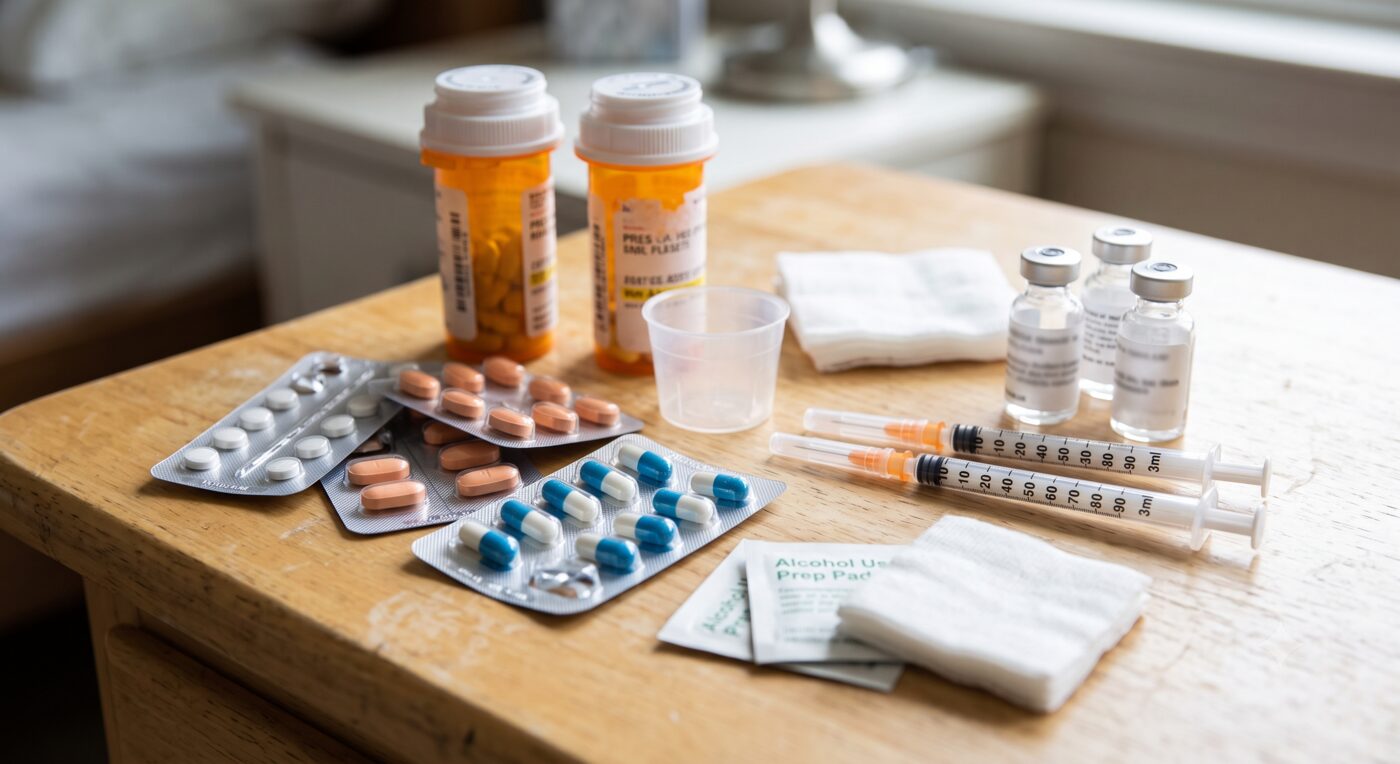
Injectable delivery introduces a peptide into the body using a needle. Depending on the medicine and its approved use, this may involve a subcutaneous, intravenous, or intramuscular route. Injections have been widely used for peptide medicines because they can avoid many of the barriers found in the digestive system — the peptide does not need to pass through the stomach and intestinal tract before reaching circulation. This ability to bypass digestive barriers makes injections a well-established route for many peptide medicines.
Benefits of Injectable Peptide Delivery
There are several reasons why injections continue to be used for peptide administration:
- Can bypass digestive barriers: The peptide does not need to pass through the stomach and intestines first.
- Established delivery route: Many approved peptide medicines use injectable routes.
- Direct administration: The peptide is placed into body tissue or circulation rather than relying on absorption through the digestive tract.
- Useful for peptides with poor GI absorption: Peptides that are unstable or poorly absorbed through the GI tract may be better suited to an injectable route.
However, these benefits come with a practical drawback: the user needs to receive or give an injection.
Challenges of Injectable Peptide Delivery
Needles can make regular peptide administration harder for some people. An injection may also require training, proper handling, and suitable storage. For treatments that require repeated doses, these steps can become part of a regular routine, and some people may feel uncomfortable with needles or find injections inconvenient.
These limitations have encouraged research into non-injectable peptide delivery methods that may provide other options for suitable peptide applications. However, a non-injectable route cannot automatically replace an injection — its suitability depends on factors such as the peptide, dose, absorption, bioavailability, and clinical requirements.
The Oral Route for Peptide Delivery
Oral delivery means swallowing a peptide in a tablet, capsule, liquid, or another format. Oral formats are easy to take and can fit into daily routines. However, peptides face several biological barriers after they are swallowed. The digestive system is designed to break proteins down, and many peptides are also too large and too water-soluble to cross the intestinal lining efficiently. These factors can greatly reduce the amount of intact peptide available for absorption.
What Happens to Peptides in the Digestive System?
A swallowed peptide may face several barriers before it can reach systemic circulation:
- Stomach acid: The acidic environment can affect sensitive peptide structures and contribute to degradation.
- Digestive enzymes: Enzymes such as pepsin and intestinal proteases can break peptides into smaller fragments.
- Intestinal barrier: Peptides are often large and water-loving, which can make it difficult for them to move across the intestinal lining.
- First-pass metabolism: After crossing the intestinal barrier, a substance may enter the portal circulation and travel to the liver before reaching the wider bloodstream, where part of it can be metabolized.
These barriers can reduce the amount of intact peptide that remains available for absorption and can lead to low oral bioavailability. Bioavailability refers to the fraction of an administered substance that reaches systemic circulation in an active form. For peptides, improving bioavailability is a major part of delivery research because a large amount of the original dose may be lost through degradation, poor absorption, or metabolism before reaching circulation.
What Makes Peptide Absorption Difficult?
Getting a peptide into the body is only the first part of the delivery process. The peptide must also remain stable, reach the absorption site, cross the biological barrier, and enter systemic circulation in a form that can remain active. Several factors can make this difficult:
- Large molecular size: Peptides are generally larger than many small-molecule drugs, which can make it harder for them to cross biological membranes.
- Low membrane permeability: Many peptides are water-loving and contain charged parts, limiting their ability to move through cell membranes and mucosal barriers.
- Enzymatic degradation: Enzymes in the digestive tract, nasal cavity, and oral tissues can break down peptide molecules before enough intact peptide is absorbed.
- Poor stability: Changes in pH, temperature, moisture, and other conditions can affect peptide structure and stability during delivery.
- Short contact time: At some absorption sites, saliva production and mucus clearance can remove the peptide before sufficient absorption takes place.
- First-pass metabolism: Peptides absorbed through the GI tract may pass through the liver before reaching systemic circulation, reducing the amount that becomes available.
This is why peptide delivery is not simply about finding a way to introduce the peptide into the body. The delivery system must also help the peptide remain stable, reach the intended absorption site, and cross the relevant biological barrier.
Buccal Peptide Delivery and How It Works
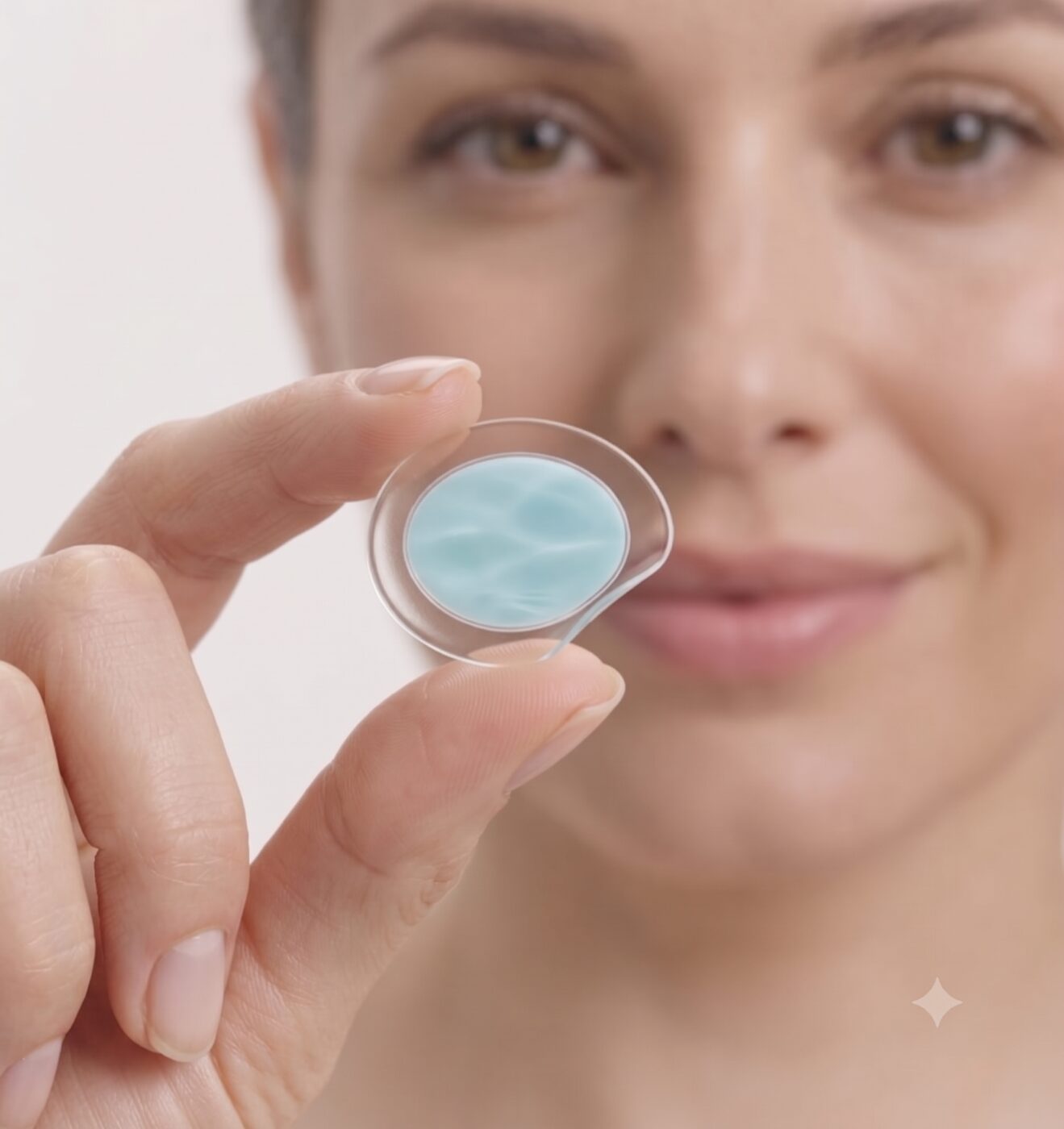
Buccal peptide delivery uses the inside of the cheek, called the buccal mucosa, as an absorption site. Instead of swallowing the peptide and sending it through the stomach and intestines, a buccal patch, film, or similar product is placed against the cheek. The buccal mucosa contains blood vessels beneath the epithelial tissue, allowing absorbed substances to move toward systemic circulation. Because absorption takes place through the oral mucosa rather than the GI tract, the buccal route can also bypass the initial hepatic first-pass effect.
However, bypassing first-pass metabolism does not automatically mean that a peptide will have high bioavailability. The peptide still needs to cross the buccal epithelial barrier, and factors such as molecular size, structure, permeability, stability, formulation, and contact time can affect how much is absorbed. The basic process looks like this:
- Placement: The patch or film is placed against the inside of the cheek.
- Peptide release: The formulation releases the peptide at the delivery site.
- Buccal contact: The peptide comes into contact with the buccal mucosa.
- Mucosal absorption: The peptide moves across the buccal tissue, depending on its size, structure, formulation, and ability to cross the mucosal barrier.
- Systemic circulation: The absorbed peptide can then enter systemic circulation without first following the normal GI-to-portal route.
Buccal delivery still has its own absorption barriers. Peptides are generally large and hydrophilic, which can make it difficult for them to cross the buccal epithelium. Saliva can also dilute the formulation or wash it away from the absorption site, while enzymes in the oral cavity can affect peptide stability. This is why buccal peptide delivery often depends on formulation design — mucoadhesive materials, permeation enhancers, multilayer films, and other delivery technologies can be used to improve contact, protect the peptide, and support movement across the mucosa.
5 Reasons Buccal Delivery Is Better Than Other Peptide Delivery Methods
Buccal delivery offers a different approach to peptide administration by using the inside of the cheek as the delivery site. It can reduce digestive exposure, avoid a traditional injection, and provide a way to work around some of the barriers associated with oral delivery. Here are five reasons why buccal peptide delivery can be a strong option for suitable peptide applications.
1. It does not require a traditional injection
Injectable delivery can provide a direct route for peptides, but it requires a needle. Buccal patches offer a needle-free approach that may provide an alternative to injections for suitable peptide products that require repeated administration.
2. It can bypass the hepatic first-pass effect
Substances absorbed through the GI tract can travel to the liver through the portal circulation before reaching systemic circulation. Peptides absorbed through the buccal mucosa can enter systemic circulation without first following this same GI-to-liver pathway, which can reduce exposure to the hepatic first-pass effect.
3. It avoids many digestive barriers
Peptides delivered through the digestive system can be exposed to stomach acid and digestive enzymes that may affect their stability. Buccal delivery places the peptide against the inside of the cheek, allowing it to avoid much of this digestive process.
4. It can support controlled peptide release
Unlike other peptide delivery formats that may release the peptide quickly, a buccal patch can be designed to release the peptide gradually over a set period, so the peptide can be released more steadily during the delivery period.
5. It can keep the peptide at the delivery site
A buccal patch can be designed to remain against the inside of the cheek for a set period. This helps keep the peptide close to the buccal mucosa while it is being released and can reduce the amount lost through saliva or swallowing. Buccal delivery is not automatically suitable for every peptide — its effectiveness depends on factors such as peptide size, dose, stability, permeability, formulation, and how well the delivery system maintains contact with the mucosa.
Peptide Delivery Through the Nasal Route
Nasal delivery uses the lining inside the nose as a route for introducing a peptide into the body. The nasal tissue has a rich blood supply, which makes it useful for certain types of drug delivery. A nasal spray or another nasal formulation places the peptide on the nasal lining, from where it may move across the tissue and enter circulation.
Benefits of Nasal Peptide Delivery
- It does not require a traditional injection.
- It can avoid the stomach and intestines.
- Administration can be simple and quick.
- It can be suitable for certain peptides and approved medicines.
Limitations of Nasal Delivery
Even though nasal peptide delivery is easy to use, it has some challenges. The amount of peptide formulation that can be placed in the nose is limited. The nasal lining also contains enzymes, and natural mucus movement can reduce the time that a peptide stays at the absorption site. Absorption can also vary between people, depending on the formulation, nasal condition, mucus clearance and contact time — which can make it harder to deliver a consistent amount of peptide through the nasal route.
Understanding Transdermal Peptide Delivery
Transdermal peptide delivery uses the skin as a route for moving a peptide into the body. A patch or another system is placed on the skin, with the goal of allowing the peptide to move through the skin and reach deeper tissue or circulation. The idea sounds simple, but the skin is designed to keep substances out — its outer layer, the stratum corneum, is a major barrier to drug movement. Peptides create an added challenge because they are generally larger and more water-loving than the small, fat-soluble molecules that can cross the skin more easily.
Barriers to Transdermal Peptide Delivery
- Peptide size: Larger molecules have more difficulty crossing the skin barrier.
- Low delivery amount: Only a small amount may cross without special techniques.
- Skin barrier: The outer skin layer strongly limits passive transport.
- Peptide properties: A peptide’s electrical charge and its ability to dissolve in water can affect how easily it moves through the skin.
Because of these barriers, transdermal peptide delivery may fail to deliver a sufficient amount of peptide across the skin. Even with techniques designed to improve peptide movement, the skin can still limit how much peptide crosses the barrier.
Oral Dissolving Films as a Peptide Delivery Route
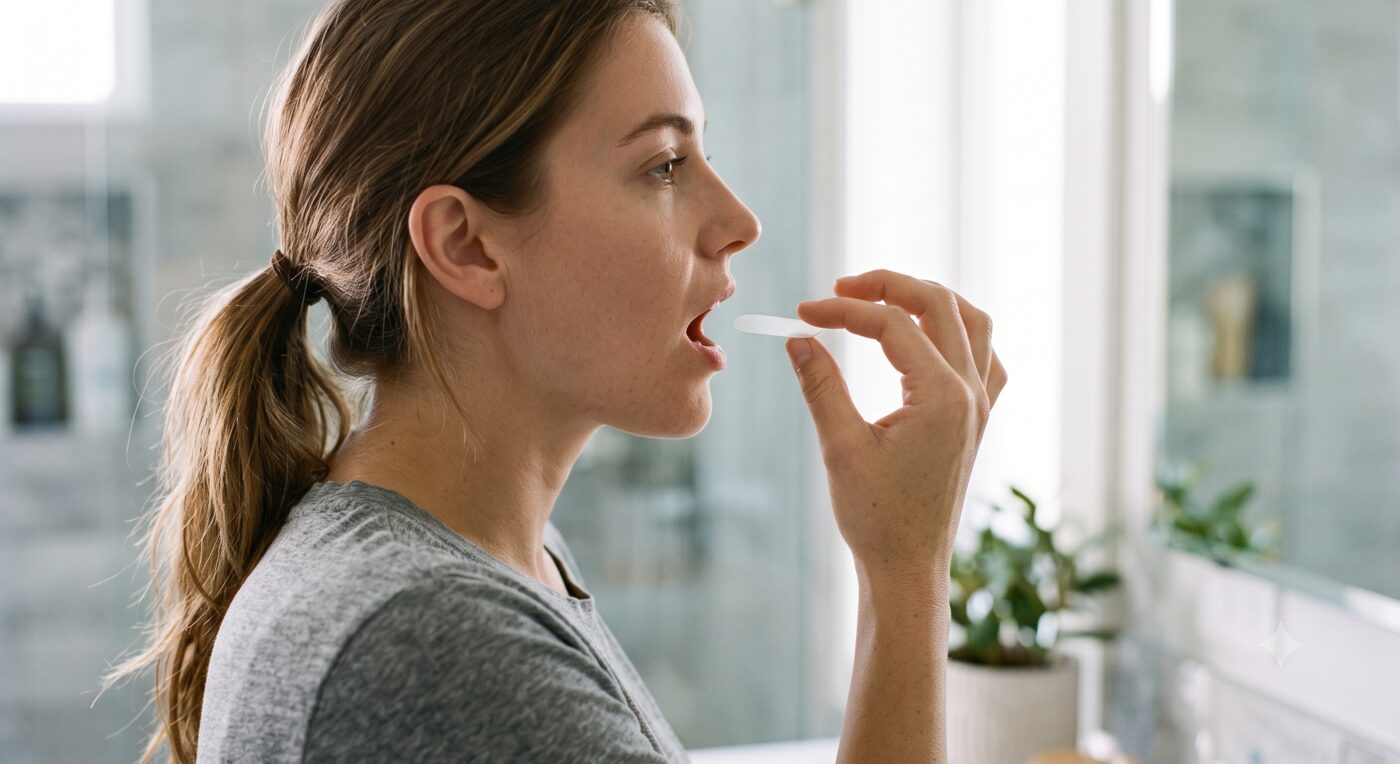
Oral dissolving formats include thin films and strips that break down in the mouth. They are placed in the mouth, where they dissolve in saliva and release the peptide into the oral cavity. However, simply dissolving the film in the mouth does not guarantee that the peptide will be absorbed through the oral tissues. After a strip dissolves, some of the peptide may interact with the oral tissues, while some may be swallowed with saliva — and if it is swallowed, it can still face the digestive barriers discussed earlier.
This creates an important difference between oral dissolving delivery and buccal delivery. A dissolving strip is designed to break down in the mouth, while a buccal patch can be designed to remain against a specific area of the cheek and keep the peptide formulation in contact with the mucosa.
Benefits of Oral Dissolving Peptide Formats
- Needle-free: The peptide can be delivered without using a needle.
- Simple to use: The user does not need to swallow a whole tablet.
- Portable format: Thin films and strips can be small and easy to handle.
Limitations of Oral Dissolving Peptide Formats
The main challenge is controlling what happens after the film dissolves. A formulation needs to consider peptide stability, the amount of peptide that can be loaded, release speed, contact with oral tissue, and the amount that may be swallowed. These factors can make it difficult to control how much peptide is absorbed through the oral tissues and how much is lost through swallowing.
How NeoPep Is Advancing Buccal Peptide Delivery
NeoPep has developed a buccal patch platform designed to provide a needle-free approach to peptide delivery. Its technology combines TD‑IntelGel and Muco‑SmartSeal to address different parts of the delivery process, including peptide stability, release, and contact with the buccal mucosa. This distinction is important because the delivery system is not simply designed to dissolve a peptide in the mouth — the NeoPep approach is designed to keep the peptide-containing formulation against the buccal tissue while supporting its movement toward and across the mucosal barrier.
TD-IntelGel: Supporting Peptide Stability and Controlled Release
TD‑IntelGel is a hydrogel-based technology used within the NeoPep buccal patch system. According to NeoPep, the technology uses a tri-layer hydrogel structure designed to support peptide stability and controlled trans-diffusion through the buccal membrane.
Supporting peptide stability. Peptides can lose their structure or activity when exposed to unsuitable conditions, so the hydrogel matrix is designed to provide an environment that helps protect the peptide during delivery. NeoPep also describes a cold-mix manufacturing process carried out below 8°C, intended to help preserve peptide structure and biological activity during formulation.
Supporting controlled release. Rather than making the full peptide content available at once, the hydrogel system is intended to support a more controlled release during the delivery period, because the rate at which a peptide becomes available can affect the amount present at the absorption site at a given time.
Supporting movement toward the buccal tissue. TD‑IntelGel is also designed to support trans-diffusion of the peptide toward the buccal mucosa — creating a path in which the peptide can move from the formulation toward the tissue rather than simply being released into saliva. The ability to cross the mucosa still depends on the peptide’s own properties and the formulation used.
How Does Muco-SmartSeal Support Buccal Patch Contact?
Maintaining contact with the buccal tissue is another important part of patch-based peptide delivery. Saliva is constantly produced in the mouth, so a formulation that is not held in place can become diluted or washed away. Muco‑SmartSeal is designed to address this: according to NeoPep, it surrounds the edges of the patch to help maintain contact with the buccal mucosa and reduce peptide loss into saliva. Its role can be understood through three functions:
- Maintaining patch position: Helps keep the patch against the buccal surface during use.
- Supporting consistent tissue contact: Helps maintain contact between the formulation and the buccal tissue.
- Reducing washout: Helps limit the amount of peptide lost through saliva before it can reach the mucosal surface.
How Is NeoPep’s Buccal Patch Different From a Normal Oral Strip?
Unlike a normal oral dissolving strip, which mainly focuses on dissolving and releasing its contents, NeoPep’s buccal patch is designed to support peptide stability, controlled release, and contact with the buccal mucosa — combining TD‑IntelGel with Muco‑SmartSeal.
| Feature | Normal oral strip | NeoPep buccal patch |
|---|---|---|
| Main focus | Dissolution and release | Buccal peptide delivery |
| Peptide stability | Depends on the formulation | TD-IntelGel provides a hydrogel environment that supports peptide stability |
| Release | Mainly based on dissolution | TD-IntelGel is designed to support controlled release |
| Buccal contact | May have limited contact time | Muco-SmartSeal is designed to maintain contact with buccal tissue |
| System design | Focuses on releasing contents in the mouth | Combines peptide protection, controlled release, and buccal contact |
How Does the NeoPep Buccal Patch Delivery Process Work?
The NeoPep approach brings peptide protection, controlled release, and buccal contact into one delivery system. The process can be understood through five basic stages:
- Patch placement: The buccal patch is placed against the inside of the cheek, where it comes into contact with the buccal mucosa.
- Peptide protection: The peptide remains within the patch formulation; TD‑IntelGel provides the hydrogel environment designed to help maintain stability.
- Controlled release: The formulation begins releasing the peptide, and TD‑IntelGel supports its movement toward the buccal tissue.
- Buccal contact: The released peptide reaches the tissue inside the cheek; Muco‑SmartSeal helps maintain contact and is designed to reduce washout into saliva.
- Peptide absorption: Once the peptide reaches the buccal tissue, it can move across the mucosa and enter systemic circulation, depending on the peptide and its formulation.
Frequently Asked Questions About Peptide Delivery
What are the main types of peptide delivery?
The main routes include injectable, oral, buccal, nasal, transdermal, and oral dissolving delivery. Each route has different factors that can affect peptide stability, absorption, bioavailability, and ease of use.
Which peptide delivery methods avoid the digestive system?
Injectable, buccal, nasal, and transdermal routes can avoid the normal GI pathway. Among these, buccal delivery offers a needle-free route while placing the peptide directly against the buccal mucosa.
Is oral peptide delivery possible?
Yes. Oral peptide delivery is possible for some medicines, but it can be difficult because digestive enzymes, stomach conditions, limited intestinal permeability, and first-pass metabolism can reduce peptide bioavailability.
What is buccal peptide delivery?
Buccal peptide delivery places a peptide-containing product against the inside of the cheek. The goal is to allow the peptide to move through the buccal mucosa rather than first passing through the stomach and intestines.
Is buccal peptide delivery needle-free?
Yes. Buccal delivery can be administered without a traditional injection, which makes it a non-injectable route for suitable peptide products.
What factors affect peptide absorption?
Peptide size, structure, charge, stability, formulation, dose, membrane permeability, contact time, and the delivery route can all affect how well a peptide is absorbed into the body.
Can every peptide be delivered through a buccal patch?
Buccal patches can be suitable for many peptide applications, but the right formulation depends on factors such as peptide size, dose, stability, molecular properties, and ability to cross the buccal mucosa. Each peptide needs to be assessed to determine how well it can work with the buccal route.
What is non-injectable peptide delivery?
Non-injectable peptide delivery refers to routes that do not use a traditional needle. Examples include oral, buccal, nasal, transdermal, and oral dissolving formats.
Conclusion
The way a peptide is delivered can be just as important as the peptide itself. Injectable routes can bypass many digestive barriers, but they require needles. Oral formats are simple to take, but peptides may be degraded in the digestive system or absorbed poorly before reaching systemic circulation. Nasal and transdermal delivery also allow needle-free administration, but each route has barriers that can affect peptide absorption.
Buccal delivery takes a different approach by placing the peptide against the inside of the cheek. This can reduce exposure to the digestive system and bypass the initial hepatic first-pass effect while offering a needle-free format. By combining needle-free administration, reduced digestive exposure, and direct contact with the buccal mucosa, buccal delivery offers a promising approach for suitable peptide applications. Technologies such as NeoPep’s TD‑IntelGel and Muco‑SmartSeal are designed to build on these features by supporting peptide stability, controlled release, and sustained contact with the buccal tissue.
Building a peptide product?
Talk to our team about developing your molecule on the TD‑IntelGel buccal delivery platform.
Partner with NeoPep